Two vaccines used in the United States help protect against pneumococcal disease. PCV13 at 65 years At least.
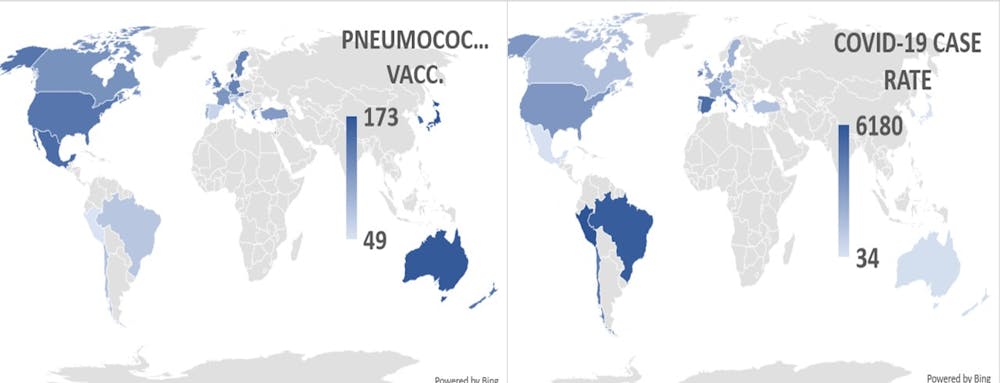 Until A Coronavirus Vaccine Is Ready Pneumonia Vaccines May Reduce Deaths From Covid 19 Global Biodefense
Patients with underlying chronic disease should probably be revaccinated every 5 years.

Pneumococcal vaccine how often. Between 10 to 17 in 20 healthy adults against invasive pneumococcal disease. Any of the following can increase your childs risk. If youre at increased risk of a pneumococcal infection youll be given a single dose of the PPV vaccine.
Two shots which will last you the rest of your life. The different types of pneumococcal vaccine. Pneumococcal conjugate 13-valent Pneu-C-13 vaccine Routine infant immunization.
3 in 4 adults 65 years or older against invasive pneumococcal disease. Studies show that getting 1 shot of PPSV23 protects. In healthy adults revaccination is not indicated necessary.
Younger than 2 years old. All babies and children younger than 2 years old. Pneu-C-13 vaccine should be administered beginning at 2 months of age using a 3 or 4 dose schedule.
Four shots at 2 months 4 months 6 months and then a booster between 12 and 15 months 65 years old or older. The polysaccharide vaccines while effective in healthy adults are not effective in children less than two years old or those with poor immune function. PPSV23 at 1964 years PPSV23 at 65 years At least 1 year apart.
Adults aged 19 to 64 at high risk for pneumococcal disease will need 1 or more doses of the vaccine. In the United States a heptavalent pneumococcal conjugate vaccine PCV 7 eg. If the 1st dose is given at the age of 6 weeks infants should still receive their next scheduled dose at 4 months of age.
A PCV series begun with PCV7 should be completed with PCV13. People 2 years or older with certain medical conditions. These vaccines are generally safe.
But if your spleen does not work properly or you have a chronic kidney condition you may need booster doses of PPV every 5 years. Indicated to receive 1 dose of PPSV23 at 19 through 64 years with no history of pneumococcal vaccination or unknown history. Adults aged 65 years or older may only need 1 dose.
The fourth dose at 12 to 15 months Children at high risk for pneumococcal disease may need 1 or 2 doses of PPSV. People with a long-term health condition may need just a single one-off pneumococcal vaccination or vaccination every 5 years depending on their underlying health problem. Burden of pneumonia meningitis bacteremia sinusitis and otitis media.
At least 5 years apart. All children are recommended to receive 13vPCV in a 3-dose schedule at 2 4 and 12 months of age. People who need a.
9 in 20 adults 65 years or older against pneumococcal pneumonia. The PCV7 vaccine that covered seven strains of pneumococcal bacteria has now been updated to the PCV13 vaccine which covers 13 strains. Infants can receive their 1st dose of pneumococcal conjugate vaccine as early as 6 weeks of age.
Pneumococcal vaccine timing for adults with certain medical conditions. The Pneumovax 23 covers twenty three different variants of the pneumococcal bacteria. There are 2 types.
PPSV23 protects against an additional 23 types of pneumonia bacteria. The type of pneumococcal vaccine youre given depends on your age and health. CDC recommends routine pneumococcal conjugate vaccination for.
The recommended three or four doses are between 71 and 93 effective at preventing severe pneumococcal disease. Pneumococcal disease contributes to the US. The normal four-dose series is given at 2 4 6 and 1214 months of age.
Your healthcare provider will tell you if you need more vaccine doses and when to get them. The CDC recommend the following schedules. Pneumococcal vaccines help protect against some of the more than 90 serotypes of pneumococcal bacteria.
Infants should receive the PCV13 vaccine at 2 4 6 and. People vaccinated prior to age 65 should be vaccinated at age 65 if five or more years have passed since the first dose. All adults 65 years or older.
However these vaccines will not prevent all. If your child needs 2 doses of the vaccine the second dose is given 8 weeks after the first dose. Neither can prevent every type of pneumonia but they work against more than 30 common severe types.
Prevnar called Prevenar in some countries was recommended for all children aged 223 months and for at-risk children aged 2459 months in 2000. The conjugated Prevnar 13 vaccine is given as a series of four injections in children. An annual flu shot influenza vaccine is probably also indicated.
Pneumococcal conjugate vaccine PCV13 Pneumococcal polysaccharide vaccine PPSV23 These vaccines are good at preventing severe pneumococcal disease which often require treatment in the hospital and can be deadly. Booster doses of pneumococcal vaccine. Another dose of either vaccine may be given if they are at least 1 year apart.
CDC recommends routine pneumococcal polysaccharide vaccination for. How often a person should get the pneumonia vaccine depends on their age and overall health.
When you are dealing with dogs nails that are overly long you should look at cutting their nails every week to two weeks or so. Make sure that they are just touching the floor as a guide for when you need to trim them.
 How To Trim Dog Nails Babies Fur House Dog Nails Dog Care Dog Training Obedience
Dogs of smaller breeds on the other hand which are mostly kept in the house or apartment need to have their nails cut more often.

How often to cut dog nails. Nail trimming and grooming are activities that are often feared by both dogs and owners. You can also tell that your dogs nails need to be trimmed if they are clicking on the floor when your dog walks. You need to trim them once per week until they are the proper length.
The answer is going to be different for every dog. Check in every 2-3 weeks and check the growth on your dogs nails. There are however a few simple tests to figure out when to do it.
How often should you cut your dogs nails. So how often should you trim your dogs nails. All these factors come into play.
Cutting should be done at least monthly to maintain a healthy length. This gives the quick time to recede and lets you cut a bit more off at each time until you get them to the right length. But if it takes your pup a little longer to get used to it.
Unless your pet is a very active outdoor dog his nails will need to be trimmed on a regular basis anywhere from once a week to once a month. And you should those little claws can be REALLY sharp and regular trimming gets them used to the procedure. So how often should you trim dogs nail.
How old the dog is what type of breed your pet pupster is. You can cut puppy nails after just a few days. What you should do is check the nails weekly to be sure they arent getting too long.
The more active your dog is the more often your need to do it. Overall a reasonable schedule for each clipping session is every two weeks for adult staffies and every week for puppies. Getting Your Dog Comfortable.
In general you should either trim your dogs nails or take them to the groomer for a nail trim whenever your dogs nails touch the floor. On average most dogs will need to have their nails trimmed every 1-2 months. As a general rule nails of large breeds of dogs should be trimmed less often as they naturally wear their nails down by walking and playing especially if the walking involves hard surfaces like concrete.
How often should I cut my dogs nails. How to Cut a Dogs Nails. On average most dogs will need to have their nails trimmed every 1-2 months.
How Long Should Dog Nails Be And How Often Should You Get Them Cut. To keep your little puppys nails sound you have to trim them by clipping or filing them about. Also listen when your dog walks across the floor.
The average dog should have his nails clipped every three to four weeks but it should be done as often as needed to keep the nail from touching the ground when your dog is standing. So you shouldnt focus on cutting the nails regularly every set amount of days or weeks but go by feel and sight. Make sure that you pick them up and cuddle and love them as you clip their nails.
How to trim your dogs nails or hire someone to help Although it can be intimidating at first trimming your dogs nails is a fairly simple process. Instead start cutting your dogs nails a little bit each week. You can also tell that your dogs nails need to be trimmed if they are clicking on the floor when your dog walks.
If you can hear the click click click of their nails then it is time to trim. However remember this wont really keep your puppys nails100 percent trimmed but might enable you to go longer between cuts. Normally once or twice a month will be enough.
If the nails are making contact with the ground its time for a trim. You can cut your dogs nails at intervals of 3 to 8 weeks depending on what kind of use your dog puts his nails to. Have your pup stand and take a look at its paws.
In as little as one week you can have one of those rare dogs who doesnt mind nail trimming one bit. If youve taken your pooch for a grooming and his nails are cut perfectly try to maintain them with a grinder weekly to eliminate the process of cutting and keep the nail smooth and healthy. The No Fear Way To Trim Your Dogs Nails.
It depends from one dog to another. On average most dogs will need to have their nails trimmed every 1-2 months. If your dog is a lapdog whose feet rarely touch the ground you may need to trim their nails more often whereas dogs that run on pavement or rough surfaces may not need theirs done that often or at all.
How Often Do You Cut a Dogs Long Nails Down. When your dogs nails seem sharp or look long then it is time to cut them down. How do you trim your dogs nails.
As you would expect puppies nails grow at a much faster rate than adult dogs. For tiny little puppies a human nail clipper often works best. Exercise is a decent method to help keep your little dogs nails shorter.
By very gradually trimming the nail close to the quick you encourage the quick to shrink back. It depends on the level of activity the surfaces for such activities and the breed. Especially if you start young go slowly and take care to avoid the nerves and blood supply to the nails.
So if its possible and practical to trim your dogs nails weekly or at least every other week youll likely see better results have a much less stressed dog and experience less stress yourself in the process. In this case trim or file the damaged nails to ensure the splits dont get worse.


